

Home / Insights / Open networking
Open networking
A white box switch lets you buy the hardware and the network software separately. Here’s how that works, who actually builds the boxes, and when it makes sense for a business.
RC
By RedCell Engineering
· Nov 17, 2026 · 4 min read
•
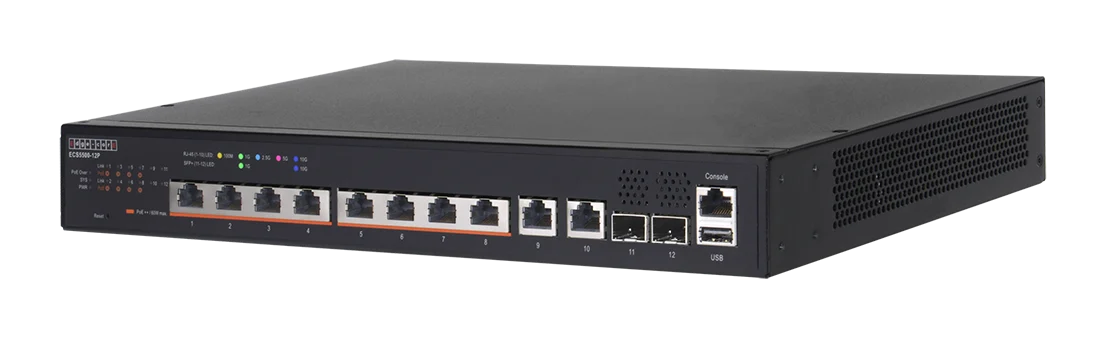
A white box switch is network hardware sold separately from its operating system. You choose the software instead of being locked to one vendor’s.
•
Most white box switches are built around merchant silicon (switching chips any manufacturer can buy) and ship with ONIE, an open installer that loads the network operating system.
•
Many of the companies that build switches for big-name brands also sell under their own names. Edgecore is the brand of Accton Technology, an original design manufacturer founded in 1988.
•
The trade-off is support. White box gives you choice and cost control, but someone has to own the integration. That’s the gap a partner like RedCell fills.
For decades, buying a switch meant buying a sealed system: the hardware, the operating system, the feature licenses and the support contract all came from one vendor, and you couldn’t mix and match.
A white box switch breaks that bundle apart. The industry term is disaggregation, which one open-networking software maker describes as “the separation of a router or switch into parts that are bought separately.” You buy the hardware from one company and choose the network operating system (NOS) that runs on it, then upgrade each on its own schedule.
It’s the same shift that happened with servers years ago. Nobody expects a server to only run one vendor’s software. White box brings that idea to the network.
“The separation of a router or switch into parts that are bought separately.”
IP Infusion, What is network disaggregation?
White box switches share a few building blocks:
•
Merchant silicon. The forwarding chip is bought from a chipmaker rather than designed in-house by the switch brand. Because the same chip family appears in hardware from several manufacturers, the hardware becomes a choice rather than a lock-in.
•
ONIE. The Open Network Install Environment is the open installer most open switches ship with. It’s how a network operating system gets loaded onto the box.
•
A network operating system you choose. Options include open-source SONiC, which Microsoft created for its own data centers, and commercial operating systems from independent software companies.
You’ll hear a few related terms:
•
Traditional (or proprietary) switches bundle hardware, software and licensing from one vendor.
•
White box switches are open hardware with no NOS preinstalled, or an installer ready for the NOS you pick.
•
Brite box (branded white box) switches are open hardware sold under a recognized brand, usually with a supported software option and a warranty. This is where most businesses outside hyperscale data centers land.
Here’s the part most buyers never see: many well-known networking brands don’t build their own hardware. They work with original design manufacturers (ODMs), companies that design and build equipment that other brands sell.
Accton Technology is one of them. Founded in 1988 in Hsinchu, Taiwan, Accton designs and manufactures networking equipment for cloud operators and major networking brands. Edgecore Networks is Accton’s subsidiary, established in 2010 to run its own global brand. So when you buy Edgecore, you’re buying from the company that builds the boxes, without another brand’s markup in between.
Edgecore is also leaning into open software. It built its own enterprise SONiC distribution in 2018, and in April 2025 Edgecore announced plans to become a pure-play open-source SONiC provider, working with Broadcom to deliver Enterprise SONiC.
See what a white box network would look like for your site.
Why businesses choose white box:
•
Choice. Pick hardware and software separately, and change one without replacing the other.
•
Cost control. No annual feature licenses tied to the hardware’s ability to forward traffic.
•
Same silicon tier. Merchant silicon means the switching chip class can match what’s in branded gear.
What to watch out for:
•
Integration is on you. With one vendor, one phone number covers everything. With white box, someone needs to own design, configuration, NOS lifecycle and spares.
•
Skills. Some open operating systems expect engineers who are comfortable with Linux and automation.
•
Support matters more, not less. The cost savings disappear if an outage turns into a week of finger-pointing between hardware and software vendors.
White box tends to fit when you’re tired of paying every year for features your hardware already has, when you run enough switches for licensing costs to add up, or when you want a network you can keep running on your own terms.
It’s a harder fit if you have no in-house networking staff and no partner, or if your environment depends on a feature only one vendor offers.
RedCell is the US-based support layer for open networking. We design the network, pre-provision every Edgecore switch and access point before it ships, and stay on call for advanced support afterward. You get the choice and economics of white box with one team accountable for making it work.
SOURCES
IP Infusion: What is network disaggregation?
ONUG: Edgecore, an Accton company
Edgecore Networks press release, April 24, 2025: strategic move to accelerate the maturity and broader adoption of SONiC
Share
Copy link
RC
RedCell Engineering
US-based network engineers who design, deploy and support Edgecore networks for businesses and service providers.
US-based engineers who design, deploy and support Edgecore networks.
IN THIS ARTICLE
Key takeaways
What “white box” actually means
What’s inside a white box switch
White box vs. “brite box” vs. traditional
Who actually builds the hardware
The honest pros and cons
Is white box right for your network?
Where RedCell fits
30-DAY EDGECORE TRIAL
A pre-configured access point and PoE switch, shipped to you, with a US-based engineer on call.
Request your trialOr call 813 885 2600
KEEP READING
LICENSING & OWNERSHIP
Meraki gives you 30 days of grace. After that, Cisco says devices stop passing client traffic.
OPEN NETWORKING
The open-source network OS Microsoft built for Azure, explained in plain English.
HOSPITALITY
How to design hotel Wi-Fi that covers every room and holds up at peak hours.
Talk to a RedCell engineer: 813 885 2600 · redcelltechnologies.com/contact
Own your network. Talk to an engineer.
813 885 2600 · redcelltechnologies.com/contact