

Home / Insights / Open networking
Open networking
SONiC started inside Microsoft’s Azure data centers and now runs on millions of switch ports. Here’s what it is, how it works, and whether it belongs in your network.
RC
By RedCell Engineering
· Nov 17, 2026 · 4 min read
•
SONiC (Software for Open Networking in the Cloud) is an open-source, Linux-based network operating system that Microsoft created for its Azure data centers and open-sourced in 2016.
•
Since April 2022 it has been hosted by the Linux Foundation, with premier members including Alibaba, Broadcom, Dell, Google, Intel, Microsoft and NVIDIA.
•
It runs on more than 100 switch platforms from multiple hardware vendors, thanks to a common hardware interface called SAI.
•
SONiC is powerful, but it’s not plug-and-play for most businesses. A supported distribution and an experienced partner make the difference.
SONiC is to network switches what Linux is to servers: an open operating system that runs on hardware from many manufacturers, so the switch you buy isn’t locked to one vendor’s software.
Microsoft built SONiC to run the switches inside Azure. In the Linux Foundation’s words, it was “created by Microsoft for its Azure data centers.” Microsoft’s Dave Maltz said the company “founded SONiC to bring high reliability and fast innovation to the routers in Azure cloud data centers.”
Microsoft open-sourced SONiC in 2016, developing it with the Open Compute Project community. In April 2022, the project moved to the Linux Foundation, which said it would “primarily focus on the software component of SONiC.” At that point SONiC “already runs on millions of ports in the networks of cloud scalers, enterprises, and fintechs.”
“SONiC already runs on millions of ports in the networks of cloud scalers, enterprises, and fintechs.”
Linux Foundation, April 14, 2022
Three ideas make SONiC different from a traditional switch operating system:
1.
It’s built on Linux. That means the same tools, automation and skills used to run servers can be used to run the network.
2.
It talks to hardware through SAI. The Switch Abstraction Interface is a standard way for software to control a switching chip. Because chipmakers support SAI, SONiC can run on hardware from many vendors without being rewritten for each one.
3.
It’s modular. Features such as routing are separate components rather than one monolithic program. SONiC’s routing protocols, including BGP, largely come from the open-source FRRouting suite.
The result is a network operating system that runs on more than 100 switch platforms and supports the features large networks depend on, such as BGP and RDMA.
SONiC started in hyperscale data centers and is spreading outward. The Linux Foundation’s 2022 announcement noted that Alibaba has widely deployed SONiC-based white box switches in its data centers and that eBay deploys SONiC at scale. The project’s premier members include Alibaba, Broadcom, Dell, Google, Intel, Microsoft and NVIDIA, with more than 50 partners.
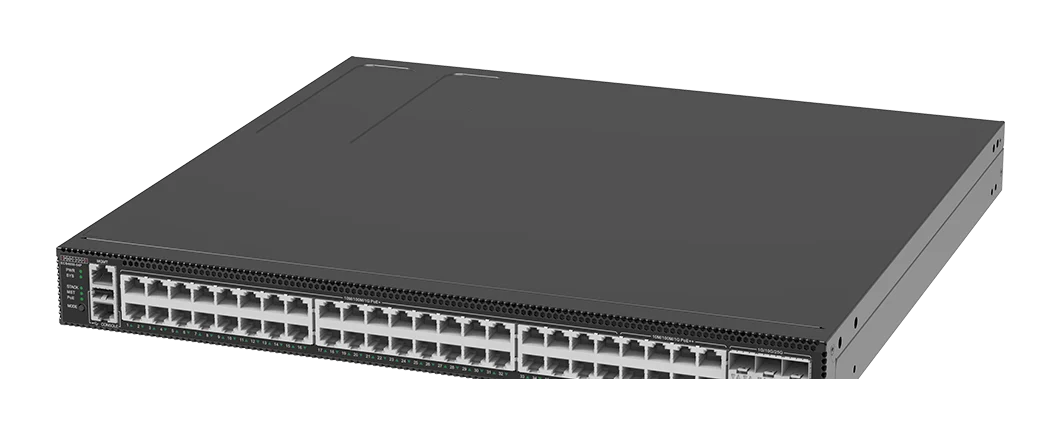
Hardware makers have followed. Edgecore Networks, the brand of switch manufacturer Accton, built its own enterprise SONiC distribution in 2018. In April 2025, Edgecore announced plans to become a pure-play open-source SONiC provider and to work with Broadcom to deliver Enterprise SONiC.
Get a straight answer from a US-based RedCell engineer.
For years, SONiC was something only companies with large engineering teams could use. That’s changing, and it matters for two groups in particular:
•
ISPs and network operators. Open hardware plus an open operating system means you’re not tied to one vendor’s pricing, licensing or roadmap as your network grows.
•
Mid-size businesses and campuses. As supported, enterprise-ready SONiC distributions mature, the same model is becoming practical outside the data center.
SONiC is not a drop-in replacement for every switch you own. Before you move:
•
Check hardware support. Confirm your switch model and chip are supported by the distribution you plan to run.
•
Decide on community vs. supported. Community SONiC is free and open. Enterprise distributions add testing, hardening and someone to call.
•
Plan for skills. Your team will benefit from Linux and automation experience, or a partner who has it.
•
Own the lifecycle. Someone needs to track releases, test upgrades and keep spares on the shelf.
RedCell is a US-based support and integration partner for open networking. We design SONiC-ready networks on Edgecore hardware, pre-provision equipment before it ships, and stay on call for advanced support, so you get the freedom of open networking without carrying the integration risk alone.
SOURCES
Linux Foundation press release, April 14, 2022: Software for Open Networking in the Cloud (SONiC) moves to the Linux Foundation
Wikipedia: SONiC (operating system)
Edgecore Networks press release, April 24, 2025: strategic move to accelerate the maturity and broader adoption of SONiC
Share
Copy link
RC
RedCell Engineering
US-based network engineers who design, deploy and support Edgecore networks for businesses and service providers.
US-based engineers who design, deploy and support Edgecore networks.
IN THIS ARTICLE
Key takeaways
SONiC in one sentence
Where SONiC came from
How SONiC works (without the jargon)
Who uses SONiC
Why it matters for ISPs and businesses
What to know before you adopt it
How RedCell helps
30-DAY EDGECORE TRIAL
A pre-configured access point and PoE switch, shipped to you, with a US-based engineer on call.
Request your trialOr call 813 885 2600
KEEP READING
LICENSING & OWNERSHIP
Meraki gives you 30 days of grace. After that, Cisco says devices stop passing client traffic.
OPEN NETWORKING
How disaggregated hardware works, who builds it, and when it makes sense for a business.
HOSPITALITY
How to design hotel Wi-Fi that covers every room and holds up at peak hours.
Talk to a RedCell engineer: 813 885 2600 · redcelltechnologies.com/contact
Own your network. Talk to an engineer.
813 885 2600 · redcelltechnologies.com/contact